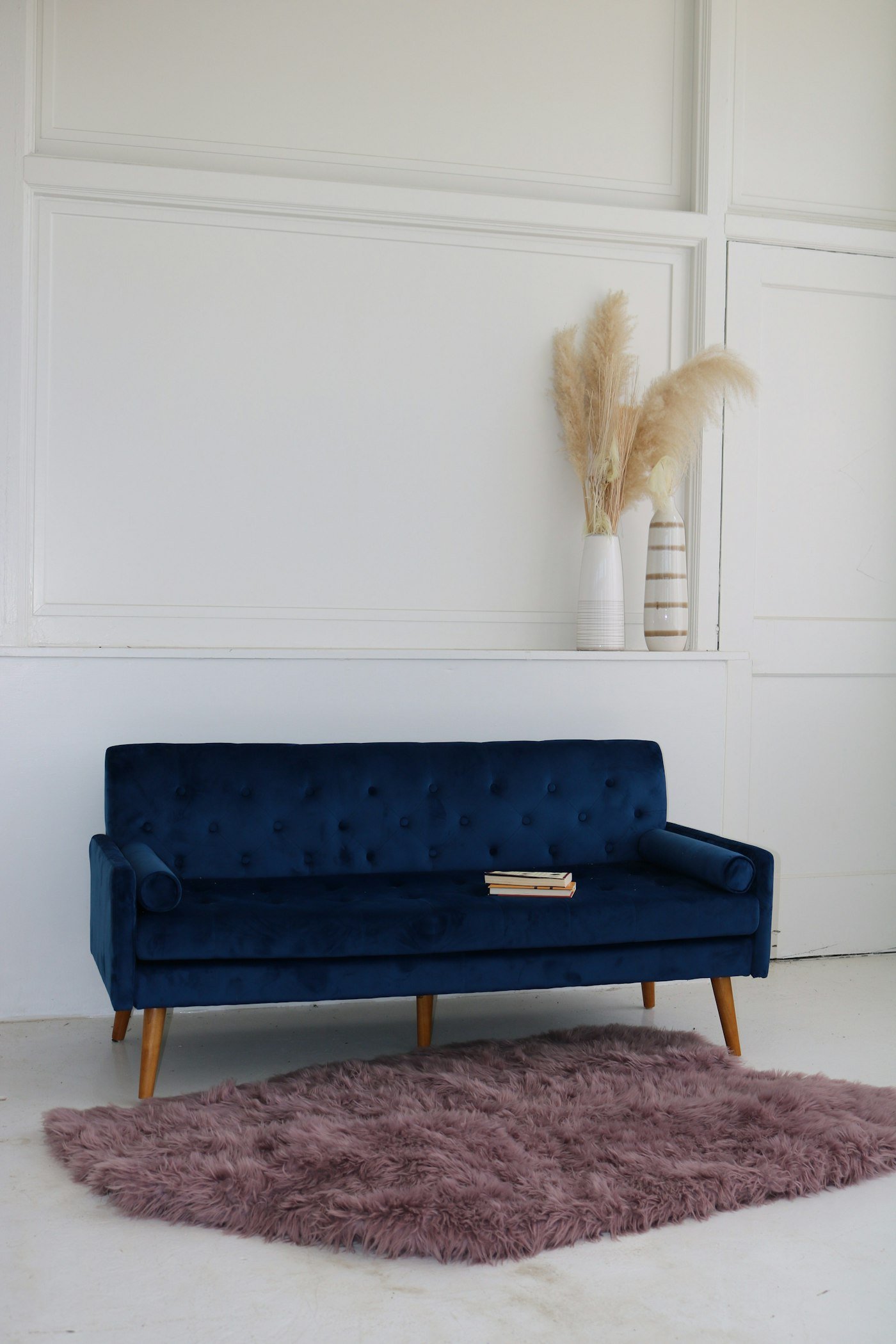
Roughly two in three NZ households have a pet, and most of those pets consider the sofa theirs. The right fabric makes that arrangement work; the wrong one becomes a shredded, hairy, slightly smelly regret. Here’s what holds up, based on what comes back into the workshop for recovering – and what doesn’t.
What pets actually do to upholstery
Different animals cause different damage, so start with yours:
- Cats scratch – vertically on arms and backs. Any fabric with loops or a loose weave is a scratching post.
- Dogs shed, drool, dig at cushions before lying down and bring in mud, sand and salt water. Nails wear the seat edges.
- Both leave oils from their coats that build up into a dark patch and, eventually, a smell.
- Puppies and kittens have accidents. The fabric needs to survive an enzyme cleaner.
The best options, ranked
1. Polyester velvet
Surprising to most people, but velvet is one of the best pet fabrics there is. The dense cut pile has no loops to hook a claw, hair brushes off with a hand or a rubber glove, and a good polyester velvet like our Regent Velvet is rated for heavy domestic use with a W cleaning code. Cats will still try, but they get no purchase and usually give up. The trade-off is pressure marking where the dog sleeps – brush it up occasionally.
2. Microfibre suede
Ultra-fine polyester fibres, tightly packed, give a suede-like surface that claws slide across and liquids bead on. Very easy to spot-clean and extremely durable. The downsides: it holds hair more than velvet (a damp rubber glove is the fix) and cheaper microfibres water-mark, so buy one with a stated W or W-S code.
3. Tight performance weaves
A flat, high-twist polyester, olefin or acrylic weave with a rub count of 50,000+ and a stain-resist finish – our Sentinel Performance Weave is a typical example. These are built for stains and abrasion and clean with water; many tolerate a diluted bleach solution, which is the only reliable way to remove a urine stain and smell. Choose the tightest weave you can; a slightly open weave can still hook a claw.
4. Leather
Pigmented (protected) leather wipes clean, doesn’t hold hair or smell and looks better with age. It is not scratch-proof – a cat will leave fine lines and a big dog’s nails will mark the seat – but on a pigmented hide those marks blend into the surface rather than tearing it. Avoid aniline leather completely; it absorbs oils and every scratch shows. Our leather grades guide explains the difference.
5. Vinyl
For a mudroom bench, a dog’s own daybed or a bach sofa, a good furniture vinyl is unbeatable on cleaning. It’s colder to sit on and claws can puncture it, so it’s a supporting player rather than the lounge suite. Choose one with a knit backing and a stated cold-crack rating for an unheated bach.
Fabrics to avoid with pets
| Fabric | Problem |
|---|---|
| Boucle | Loops are a claw magnet; unpicks in weeks with a cat |
| Chenille | Pile pulls out in tufts; holds hair |
| Linen and cotton | Absorb oils and urine; snag; stain |
| Silk and viscose-rich blends | Water-mark; low rub counts |
| Tweed and open wool weaves | Snag; hold hair and odour |
| Aniline leather | Every scratch and oil mark shows |
Colour and texture tricks
Match the fabric to the pet. A black lab on a cream sofa is a full-time cleaning job; the same dog on a charcoal heather disappears. Mid-tones and small textures (a fine herringbone, a heathered weave) hide hair and marks far better than flat solids at either end of the scale. If you have a white cat and a black dog – it happens – a mid-grey or a mottled blue-green is your friend.
Under the fabric matters too
Dogs that dig at a cushion will find any weak spot. Use a firm high-resilience foam (we recommend HR35 for seats) wrapped in dacron so the cover stays tight; a loose cover is what claws catch. If you’re recovering, replace the cushion inner at the same time – old foam that has softened lets the fabric crease, and creases wear through.
Dealing with the smell
Odour comes from coat oils and, occasionally, accidents that soaked through to the foam. On the fabric, a W-code weave or velvet can be cleaned with a mild upholstery shampoo; sprinkle baking soda, leave it an hour and vacuum for the in-between weeks. If the smell is in the cushion, no amount of surface cleaning will fix it – replace the foam inner and wrap the new one in a waterproof liner before the cover goes back on. For a dog that always sleeps in the same spot, a washable throw over that cushion is the cheapest fabric protection there is.
Cleaning routine that actually works
- Vacuum twice a week with the upholstery tool. Hair left in the weave grinds the fibres.
- Rubber glove or squeegee for stubborn hair on velvet and microfibre.
- Blot accidents immediately, then an enzyme cleaner (not ammonia-based, which smells like urine to a cat and encourages repeats).
- Wash removable cushion covers at 30°C if the code allows, or spot-clean with a W-code method.
- Every six months, a proper clean – see our guide to cleaning fabric and leather furniture.
Recovering a pet-damaged sofa
If the frame is solid and the springs are fine, recovering an existing sofa in a pet-proof fabric is usually cheaper than a new sofa of the same quality – and you can specify the foam, the fabric and the finish yourself. A 3-seater needs 12–14 m at 140 cm width; check the numbers with us via the contact page.
It’s a big job to do at home. If you’re in Auckland and would rather have it done, our sister workshop Upholstery World reupholsters sofas and armchairs, and can use fabric you’ve bought here. They also do repairs for the odd clawed arm panel when the rest of the sofa is fine.
Shop it: Order a sample pack and let the cat at it – five minutes with a swatch tells you more than any spec sheet. Pet-proof velvets and performance weaves are in our fabric range and performance collection. Everything ships nationwide from our workshop — courier to any New Zealand address, or click & collect.