“Genuine leather” is one of the least useful phrases in furniture. It can describe a hide that will outlive you or a paper-thin bonded sheet that peels in three years. Here’s how to read what you’re really buying.
Two things define a leather: the cut and the finish
A raw hide is thick — far too thick for furniture — so tanneries split it into layers. Which layer you get (the cut) determines strength and character. What’s applied to the surface (the finish) determines colour consistency, stain resistance and feel. Both matter, and most confusion comes from mixing them up.
The cuts
Full-grain
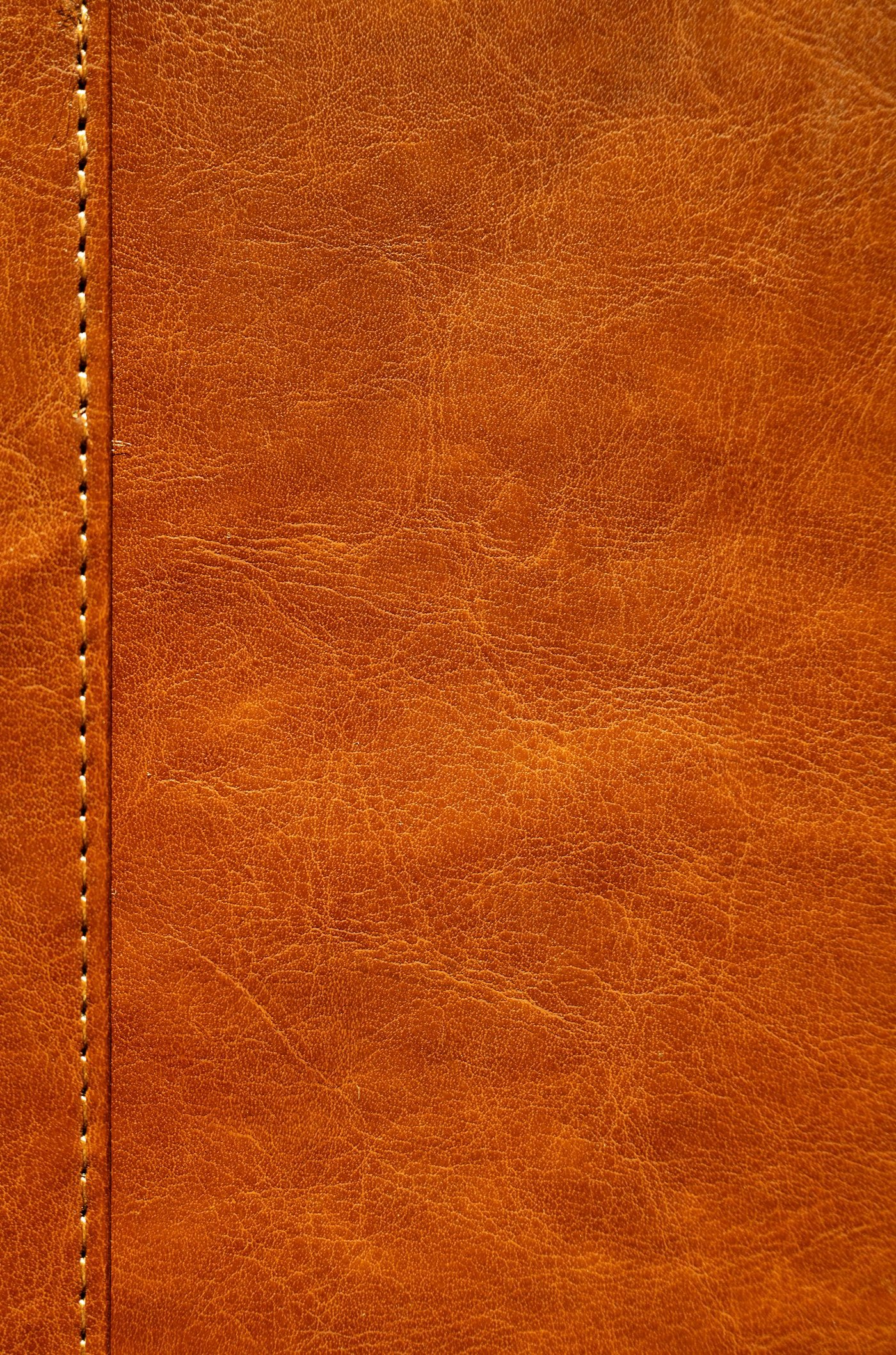
The top layer of the hide with its natural surface left intact. You’ll see healed scars, insect bites, growth lines and variation in grain — the fingerprints of a real animal. Because the dense outer fibres are untouched it’s the strongest cut, breathes best, and develops a rich patina as it ages. It’s what our Waikato hides are. Best for statement pieces you’ll keep for decades.
Top-grain
Still the top layer, but the surface has been lightly sanded or buffed to remove imperfections, then usually embossed with a uniform grain. Slightly less strong than full-grain, more consistent to look at, and easier to finish. The majority of good-quality furniture leather is top-grain.
Corrected-grain
Top-grain that has been more heavily sanded to remove all natural marks, then embossed and coated. Often used with a pigmented finish (below). Very consistent, very practical, less “leathery” to the touch.
Split leather
The lower layers left after the top is split off. Weaker, fuzzy on both sides (that’s suede), and usually coated to imitate grain leather. Fine for the backs and sides of a sofa where the budget is tight; avoid on seats.
Bonded leather
Shredded leather scraps glued to a fabric or paper backing and coated with polyurethane. It’s 10–20% leather at best and it will peel. We don’t sell it and we’d gently suggest you don’t buy it.
The finishes
| Finish | How it’s made | Look & feel | Practicality |
|---|---|---|---|
| Aniline | Dyed through with transparent dyes, no surface coat | The most natural, buttery leather there is; shows every mark | Stains and fades easily — for the leather purist |
| Semi-aniline | Aniline dyed plus a very thin protective top coat | Natural grain still visible, slightly more even colour | The sweet spot for homes: soft, but wipeable |
| Pigmented (protected) | Opaque colour coat and clear sealant over corrected grain | Uniform colour, slightly firmer hand | Most stain- and fade-resistant; ideal for families & commercial |
| Pull-up / waxed | Aniline with oils and waxes worked in | Lightens where stretched — the “distressed” look | Marks are the point; easy to re-wax |
| Nubuck | Full-grain buffed to a velvet nap | Soft, matte, luxurious | Very absorbent — keep it away from kitchens |
Which leather for which job?
- Family sofa, pets, kids: pigmented or semi-aniline top-grain. Our Highland is made for this.
- Reading chair, formal lounge, heirloom restoration: semi-aniline or aniline full-grain. Let it age.
- Dining chairs, bar stools, office seating: pigmented. Wipe-clean wins every time.
- Cars, boats: purpose-made automotive/marine leather with UV-stable pigmented finish — ask us.
Reading a leather spec sheet
Thickness is quoted in millimetres: 0.9–1.1mm is standard for furniture, 1.2mm+ for heavy commercial. Hide size is in square metres or square feet (1 m² ≈ 10.76 sq ft); a full bovine hide is typically 4.5–5.5 m². Abrasion is tested to ISO 17076 (Taber); 50,000 cycles is a good domestic figure. Colour fastness to light (ISO 105-B02) should be grade 4+ for a sunny room.
How many hides?
Hides are irregular and you’ll cut around scars and thin belly areas, so allow 25–30% wastage. Roughly: armchair 2 hides · two-seat sofa 3 hides · three-seat sofa 4–5 hides · six dining seats 1 hide. Send us your pattern and we’ll confirm before you order.
Feel it first. Leather has to be touched. Order a leather sample pack — four cuttings from current stock, refunded on your first hide.