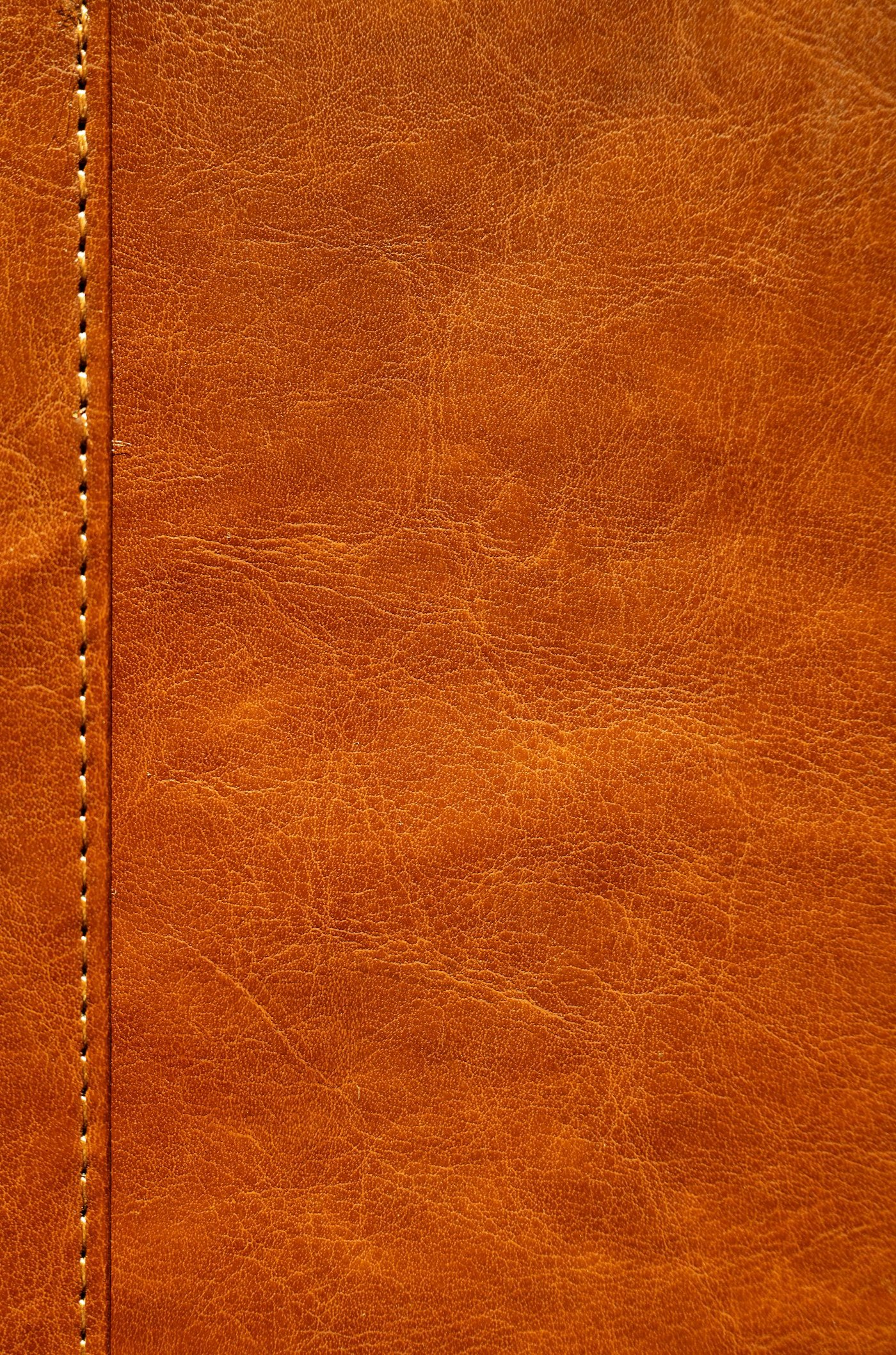
Faux leather has come a long way from the peeling vinyl of 1990s office chairs, and genuine leather is no longer the automatic “premium” answer for every job. Here is how the two really compare on wear, feel, cost, cleaning and NZ conditions – written by people who cut both every week.
What “faux leather” actually means
Faux leather is a blanket term for any leather-look material that isn’t hide. In upholstery you’ll meet three main types:
- PVC (vinyl): a PVC skin bonded to a knit or woven backing. Tough, waterproof, cheap to produce. This is what marine and commercial “leather-look” seating is usually made from – see our vinyl range.
- PU (polyurethane): softer and more leather-like in hand than PVC, with better drape. Less resistant to abrasion and can hydrolyse (go sticky and flake) in humid conditions if the grade is poor.
- Bonded or “bicast” leather: shredded leather fibres glued to a backing and sprayed with a PU top coat. Legally sold as leather in some markets, but performs like a low-grade PU. We don’t recommend it for seating.
Genuine leather, by contrast, is a tanned animal hide. Its performance depends heavily on the grade – full grain, top grain or pigmented/corrected – which we cover in Leather grades explained.
Faux leather vs real leather: the head-to-head
| Factor | Faux leather (PVC/PU) | Genuine leather |
|---|---|---|
| Typical lifespan on a family sofa | 3–8 years (PVC longer than PU) | 10–25 years with basic care |
| Abrasion | Good (PVC often 100k+ Martindale) | Excellent on full/top grain |
| Breathability | Poor – warm and sticky in summer | Good – regulates temperature |
| Water and spills | Waterproof surface, wipe clean | Pigmented resists; aniline absorbs |
| UV in NZ sun | PVC fair with UV stabilisers; PU poor | Fades and dries out without conditioning |
| Cracking and peeling | PU can delaminate after 3–5 years | Won’t peel; can crack if neglected |
| Repairability | Difficult – patches show | Good – colour and scuff repair possible |
| Price per m² (indicative) | Low to moderate | Moderate to high |
Where faux leather wins
Wet, messy and high-traffic jobs
Boat squabs, café booths, gym benches, medical seating, kids’ playrooms – anywhere the surface gets soaked, bleached or wiped down twenty times a day. A good marine or commercial PVC shrugs off sunscreen, salt and cleaning chemicals that would ruin a hide. It’s also the only sensible choice where fire-rating certificates are needed on a budget; many of our PVC & coated fabrics carry AS/NZS 1530.3 test data.
Tight budgets and short-life pieces
A rental-property dining set or a bar stool that will be replaced in five years doesn’t justify hide. PVC at roughly a third of the price gives a clean look and easy cleaning for that lifespan.
Consistency
Vinyl comes on a 137–140 cm roll with no scars, brand marks or variation. You can cut it like fabric with almost zero wastage, which matters when you’re covering 40 chairs for a café.
Where genuine leather wins
Everyday lounge furniture
This is where the “honest” part comes in. On a sofa that gets sat on for hours every evening, leather is simply more comfortable. It breathes, warms to body temperature, and develops a patina rather than a worn patch. A pigmented hide like our Highland pigmented half hide will still look respectable after 15 years of a family and a dog; a PU sofa of the same age is usually in the skip.
Cost per year, not cost per metre
Run the numbers over the life of the piece. A 3-seater needs 4–5 hides (allow 25–30% wastage for scars and shape). That is more up front than 12–14 m of vinyl, but if it lasts three times as long the annual cost is lower – and it can be re-conditioned or repaired instead of replaced.
Resale and reupholstery value
Nobody reupholsters a faux-leather sofa; the frame usually isn’t worth it. Solid-framed leather furniture is routinely recovered, and a quality hide adds to the resale value of a classic frame.
The NZ-specific issues
New Zealand UV is among the highest in the world, and that changes the calculation for both materials:
- PU faux leather near a north-facing window will chalk and crack in a few summers. If you must use PU, keep it out of direct sun.
- PVC needs a UV-stabilised top coat. Automotive and marine grades have it; cheap furniture vinyl often doesn’t.
- Leather fades and dries in sun. A conditioner twice a year and a blind on the hot side of the room keep it supple – see our cleaning and care guide.
- Humidity in Auckland and Northland accelerates PU hydrolysis. Ask for a hydrolysis rating (5+ weeks at 70°C/95% RH is a good benchmark) before buying PU for seating.
How to tell them apart in a showroom
- Look at the cut edge. Hide has a fibrous, suede-like back; faux has a woven or knit textile backing.
- Press it. Leather wrinkles in fine, irregular lines like skin; PVC creases in a smooth, uniform way.
- Smell it. Tanned hide smells of leather; PVC smells faintly of plastic.
- Check the pattern. Printed faux grain repeats every 30–60 cm; real grain never repeats.
Our recommendation
Choose genuine leather for lounge suites, armchairs, office chairs you sit in all day, and any piece you expect to keep for a decade. Choose PVC vinyl for boats, commercial and hospitality seating, bar stools, headboards and wet areas. Treat PU as a decorative material: fine for a bedhead or an occasional chair, risky for a daily-use sofa in NZ conditions. Avoid bonded leather for seating altogether.
Not sure which suits your frame? Order a leather sample pack alongside a couple of vinyl swatches and live with them for a week on the arm of the sofa. If you are in Auckland and want the job done rather than the materials, our sister workshop Upholstery World reupholsters in both leather and vinyl and will quote free.
Shop it: Compare hides and vinyl side by side. Browse our leather hides and upholstery vinyl, or start with a leather sample pack shipped NZ-wide.