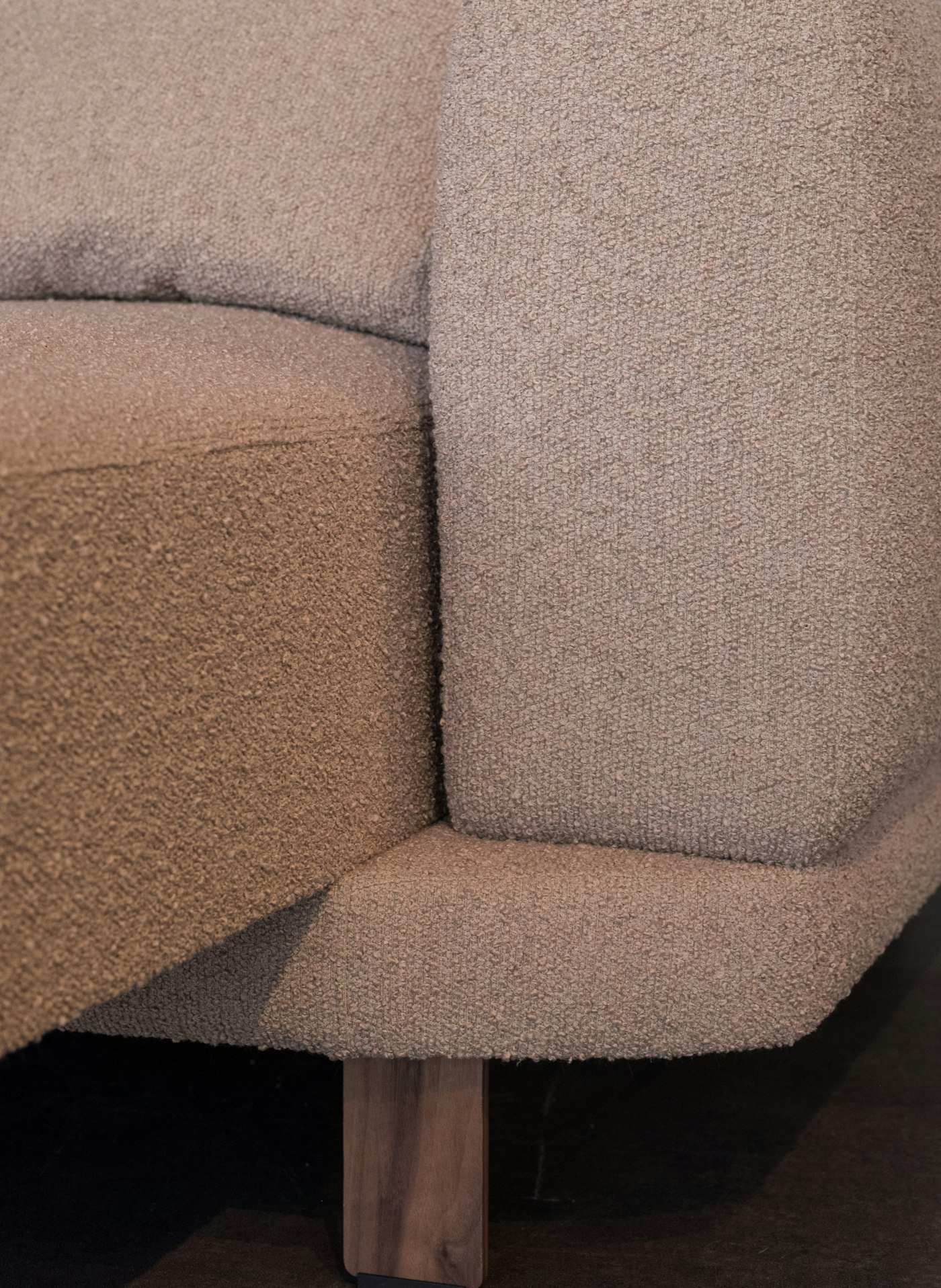
Sagging cushions are the number one reason people give up on a perfectly good sofa. Nine times out of ten it’s the wrong foam — usually a cheap low-density grade that felt fine in the showroom. Here’s how to specify foam that still feels good in five years.
Density and firmness are different things
This is the concept that trips everyone up. Density (kg/m³) is how much material is in the foam — and it predicts durability. Higher density foam keeps its height and support for longer. Firmness (measured in Newtons, or as “hardness”) is how much force it takes to compress the foam — it predicts feel. You can have a high-density soft foam or a low-density firm foam. For seating you want high density and medium-to-firm hardness.
| Density | Grade | Expected life in a seat | Use it for |
|---|---|---|---|
| Under 22 kg/m³ | Packaging / craft | Under 1 year | Nothing you sit on |
| 23–28 kg/m³ | Standard | 2–4 years | Backs, arms, headboards, occasional use |
| 30–35 kg/m³ | High density | 5–8 years | Everyday seats, dining chairs |
| 35–40 kg/m³ HR | High resilience | 8–12+ years | Sofas, commercial seating, anything used daily |
| 45+ kg/m³ | Premium HR / latex | 12+ years | High-end and hospitality |
What “HR” means
High-resilience foam has a different cell structure from conventional polyurethane foam: the cells are more open and irregular, so it compresses progressively (soft at first, then supportive), recovers faster, and breathes better. It’s the difference between a cushion that “catches” you and one that bottoms out. Our HR35 is the grade we use on every seat we build.
Choosing firmness
Firmness is personal, but there are sensible ranges. Measured as the force needed to compress a sample by 40% (ILD / IFD):
- Soft (80–120N): back cushions, headboards, scatter cushions
- Medium (120–160N): lounge seats, window seats, bench seats with Dacron wrap
- Firm (160–220N): dining chairs, office and bar seating, boat squabs, anywhere posture matters
- Extra-firm (220N+): gym equipment, motorcycle seats, commercial bench seating
Remember that thicker foam feels softer at the same firmness, and that a Dacron wrap adds a soft first touch on top of a firm core — which is exactly the combination most people love.
How thick?
| Application | Thickness | Suggested grade |
|---|---|---|
| Sofa seat cushions | 100–125mm | HR35 medium-firm + Dacron |
| Sofa back cushions | 75–100mm (or fibre-fill) | 23–28 kg/m³ soft |
| Dining chair drop-in seat | 50mm | HR35 firm |
| Bench / window seat | 75–100mm | HR35 medium-firm |
| Bedhead panel | 25–50mm | Standard soft |
| Boat squabs | 75–100mm | Firm HR or closed-cell/reticulated |
| Outdoor cushions | 75–100mm | Reticulated “dry-fast” foam |
Foam for boats and outdoors
Standard foam soaks up water like a sponge and takes days to dry, which is how mildew starts. For anything that lives outside or on a boat, use reticulated (open-cell, “dry-fast”) foam that drains in minutes, and cover it in a solution-dyed acrylic. Ask us about reticulated grades — they’re a special order.
Fire safety
All the seating foam we sell is combustion-modified (CM) and tested to AS/NZS 1530.3. If you’re working on a commercial or public project you may also need the foam and cover to be tested as a composite — our fire ratings guide covers what applies where.
Measuring for a replacement cushion
Measure the cover, not the old foam (which has shrunk). Add 10mm to length and width so the foam fills the cover snugly, and match the old thickness unless it was clearly too thin. For T-shaped or curved cushions, trace the old foam onto cardboard, photograph it next to a tape measure and send it to us — we’ll cut it exactly.
Shop foam & padding: HR35 seat foam sheets in 25–100mm, Dacron wrap, or request a cut-to-size quote.