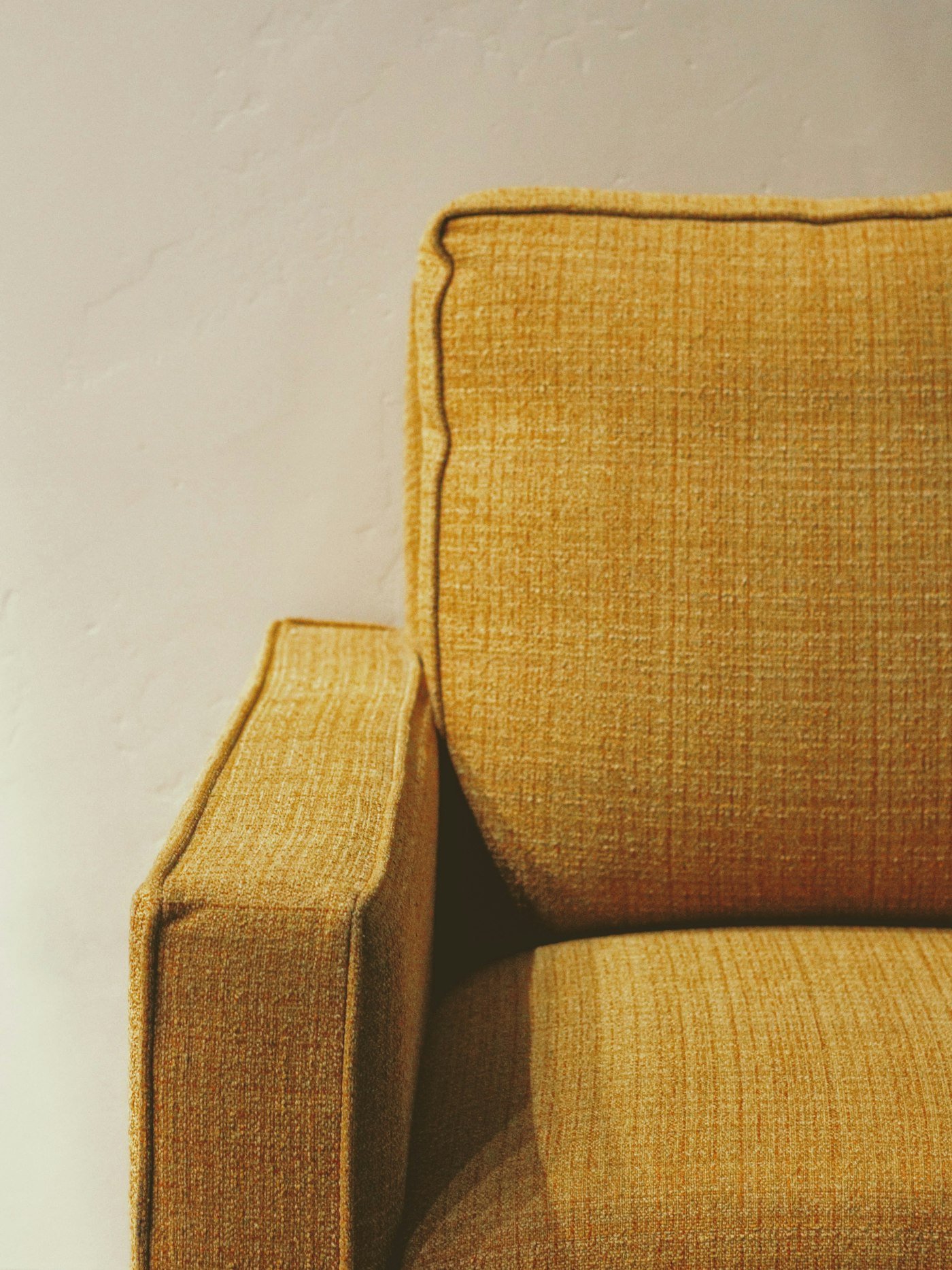
“Performance fabric” has become a marketing label stuck on everything from genuinely bulletproof commercial weaves to ordinary polyester with a spray coating. If you have kids, dogs, red wine or all three, it pays to know what the term actually covers – and which numbers on the spec sheet back it up.
What a performance fabric really is
There is no legal definition. In the trade, a performance upholstery fabric is one engineered so that spills bead up and wipe off, abrasion doesn’t wear it through, and it can be cleaned with water or mild bleach solutions without damage. That performance comes from one or more of three things:
- Fibre choice. Solution-dyed acrylic, olefin (polypropylene) and high-tenacity polyester don’t absorb liquid the way cotton, linen and viscose do. Stains sit on the surface.
- Construction. A tight, flat weave with a stable backing resists abrasion and stops liquid pooling between the yarns.
- Finish. A fluorocarbon or newer PFAS-free repellent applied at the mill makes water and oil bead. This is the part that wears off with cleaning and needs re-treatment every few years.
The names vary by mill – you’ll see terms like “easy-clean”, “stain-resist”, “FibreGuard-style” or “inside-out” fabrics. They’re all describing some mix of the three mechanisms above. What matters is which ones a given fabric actually has, and the spec sheet will tell you if you know where to look.
A fabric that relies only on the finish is a normal fabric with a coating. A fabric that has all three – like our Sentinel Performance Weave – will still perform after the coating has faded.
Reading the spec sheet
Four numbers tell you almost everything. If a product page doesn’t list them, ask.
| Spec | What to look for | Why it matters |
|---|---|---|
| Martindale rub count | 40,000+ for family use; 60,000+ if it’s the main sofa | Abrasion resistance – the arm fronts and seat edges |
| Cleaning code | W or W-S; ideally “bleach cleanable” | W means you can use water-based cleaners, which is what you’ll reach for at 9pm |
| Pilling (ISO 12945) | Grade 4–5 | Cheap polyester pills; a grade 3 will look tired in a year |
| Lightfastness (ISO 105-B02) | Grade 5+ (out of 8) for a sunny room | NZ UV fades fabrics faster than the mill’s European tests assume |
For a longer walk through these figures, see our guide to choosing upholstery fabric in NZ.
The main performance fibres compared
Solution-dyed acrylic
Colour is locked into the fibre, so it doesn’t fade – this is the same family used for boat covers. Excellent for sunrooms and indoor-outdoor living. Slightly drier hand than polyester and a narrower colour range.
Olefin (polypropylene)
The stain champion. Olefin absorbs almost no moisture, so even red wine and turmeric can usually be lifted with water and a cloth. It is also inherently colourfast. Drawbacks: it can feel a little waxy, and it doesn’t like high heat, so keep the iron and hot-water extraction well away.
High-tenacity polyester
The everyday choice. Modern polyester weaves and velvets take colour beautifully, are soft to sit on and hit 50,000–100,000 rubs without trouble. Stain resistance depends more on weave tightness and finish than the fibre itself, so read the spec.
Chenille and microfibre
Polyester microfibre suede is softer than any of the above and very hard-wearing. It resists stains well but holds pet hair and can water-mark if you soak it. Good for bedrooms and TV rooms; think twice for the main living area if you have a long-haired dog.
What performance fabric won’t do
A little realism saves disappointment:
- It won’t stop a claw. Stain resistance and snag resistance are different things; for cats, choose a tight, flat weave or a velvet.
- It won’t survive neglect. A spill left overnight on any fabric can wick under the finish. Blot within minutes and most performance weaves come up clean.
- It won’t fix bad foam. If the seat cushions are collapsing, the cover will wear at the creases whatever it’s made of. Our foam density guide explains what to replace them with.
- The repellent finish wears off. After two or three years of cleaning, re-treat with a fabric protector spray.
Cleaning a performance fabric properly
Most stains: blot (don’t rub) with a white cloth, then a little dishwashing liquid in warm water on a cloth, then a clean damp cloth to rinse, then a dry towel. For W-code, bleach-cleanable fabrics, a 1:10 household bleach and water solution will shift ink, wine and marker – test on a hidden spot first. Vacuum weekly with the upholstery brush to keep grit from cutting the fibres. We cover the full routine in how to clean and care for fabric furniture.
Room by room
- Main living room: 60,000+ rubs, W code, pilling 4+. This is where you spend the money.
- Kids’ rumpus or TV room: olefin or a bleach-cleanable polyester in a mid-tone; stain resistance matters more than hand feel.
- Sunroom or indoor-outdoor: solution-dyed acrylic for the lightfastness – a standard performance polyester will still fade here.
- Rental or bach: vinyl-look performance weave or a tight olefin; cheap to replace, easy to clean, no cleaning-code drama for tenants.
How much do you need?
Performance weaves are usually plain or small-textured, so metreage is straightforward: around 5–6 m for an armchair, 8–10 m for a 2-seater and 12–14 m for a 3-seater at 140 cm width. Add 10% if the weave has a visible direction. Send photos and measurements via our contact page and we’ll confirm before you order.
Getting it onto the furniture
If your existing sofa frame is sound and the cushions are still good, recovering in a performance fabric is often the best-value upgrade you can make – far cheaper than a new sofa of the same quality. Dining chairs are an easy DIY; a full sofa is a serious job. If you are in Auckland and would prefer to hand it over, our sister workshop Upholstery World reupholsters sofas and chairs in fabric you’ve bought from us, with a warranty on the work.
Shop it: Every fabric in our performance & commercial range lists its rub count, cleaning code and lightfastness on the product page. Grab a sample pack and pour a splash of coffee on it – the best test is the one you run yourself. Everything ships nationwide from our workshop — courier to any New Zealand address, or click & collect.